
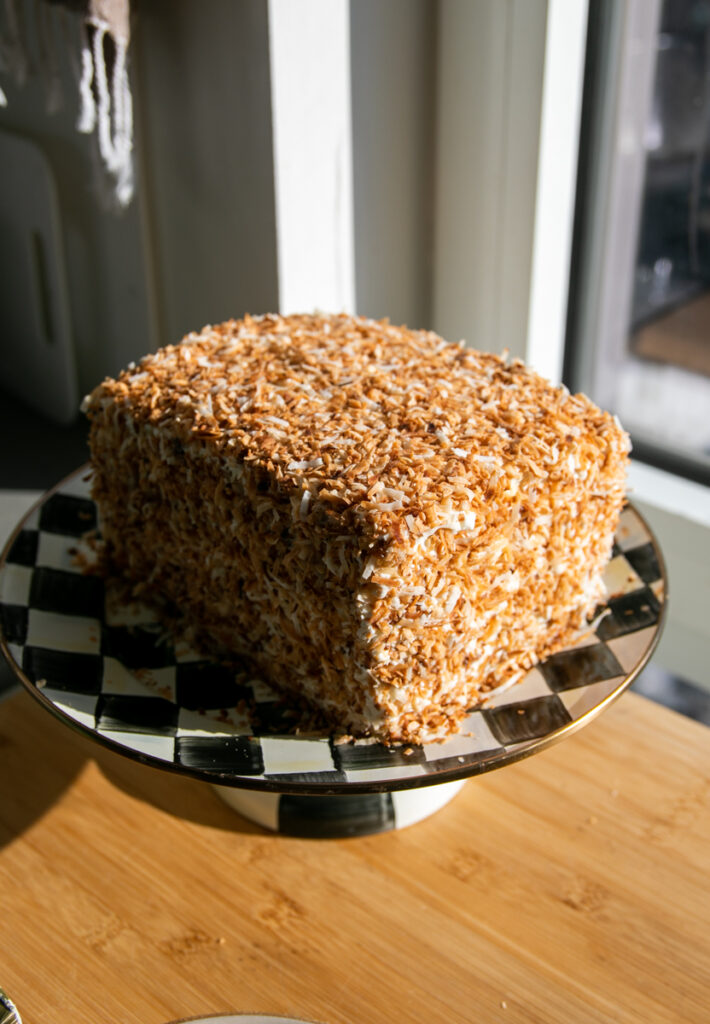
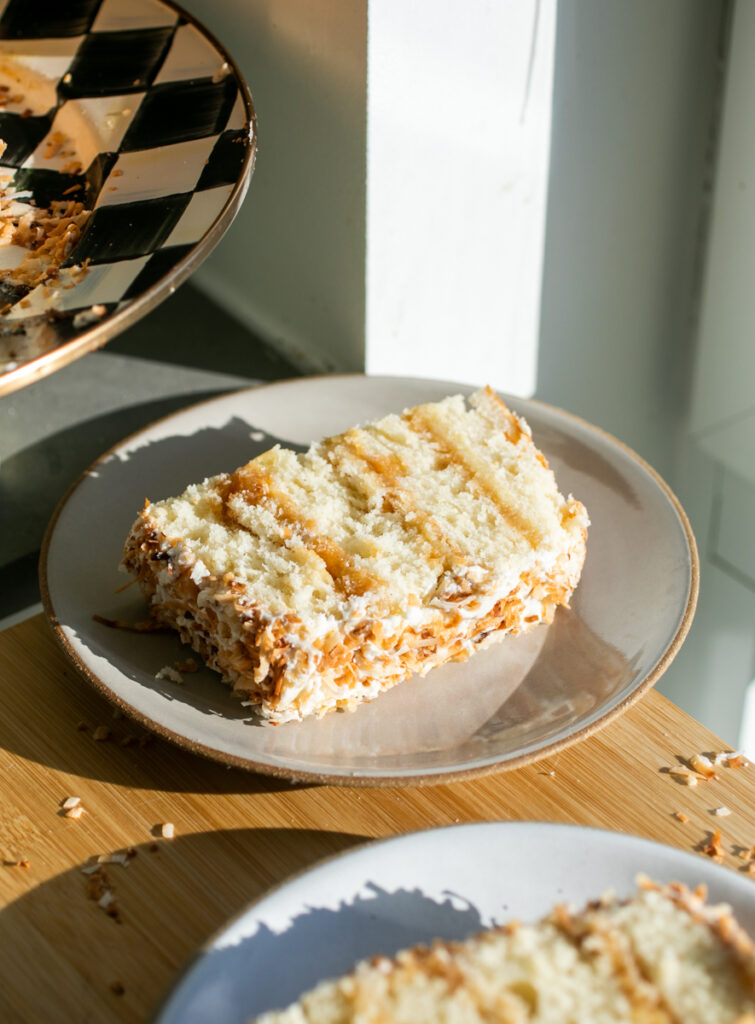
This stunning four-layer coconut caramel cake is a perfect dessert centerpiece for Easter or any spring celebration or party! Tender white cake layers are layered with coconut pastry cream, caramel and covered in toasted coconut for layers of subtle coconut flavor without the texture of coconut inside the cake.
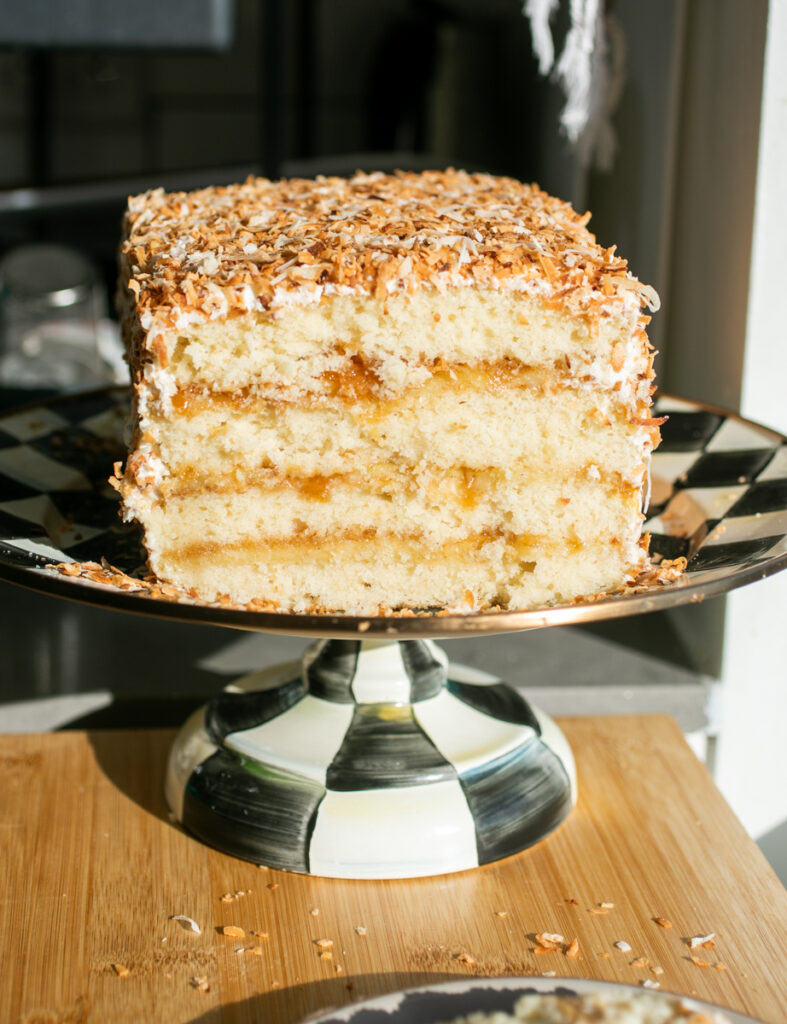
This cake was inspired by my four-layer carrot cake that made it onto the cover of Southern Living. I adapted it from my classic coconut cake with a few key changes that makes the cake crumb even lighter to make way for the gooey caramel sandwiched between the layers.
As I discovered through the coconut cake bake off, I’m not a huge fan of the texture of shredded coconut inside the cake or a strong artificial coconut flavor. So if you love a more subtle coconut flavor without a super chewy filling, this cake is perfect for you!
Why you’ll love this recipe
- Soft and tender cake crumb: To me, this cake crumb almost feels as light and fluffy as cake mix but with a rich homemade flavor.
- Not too sweet: Instead of filling and coating the cake in buttercream, we’re layering the cake with coconut pastry cream for an overall less sweet effect with a subtle coconut flavor.
- Easy to bake in one pan: Instead of baking multiple cake rounds, you’ll simply bake the cake batter in a half sheet pan and slice into four rectangles for assembly.
How I developed this coconut caramel cake
The inspiration for the design of this cake comes from my Southern Living carrot cake, so I knew I wanted to bake the cake in a large sheet pan and cut it into fourths.
When I was thinking about the layers, I thought about something I saw a creator (I believe @bakeswithrach_) say–everyone loves her cakes (even people who don’t like cake!) because she never fills them with buttercream: only puddings or pastry creams. Some people do find the carrot cake a bit sweet, so I decided to do a coconut pastry cream inside this cake rather than buttercream.
Most coconut pastry creams I looked at used a combination of coconut milk and milk, which I suspect is to cut the richness slightly and keep the cream light and loose. I based my recipe on Claire Saffitz’s recipe, but with a smaller ratio of regular milk because I wanted more coconut flavor. I also used slightly fewer egg yolks mainly because I was using any leftover egg components in the cake, and it didn’t need more eggs. The resulting coconut pastry cream is purposefully less sweet (and almost leans leans salty) to balance the caramel that gets layered on top of it.
Onto the cake! I based this on my classic coconut cake. The main difference: it uses one whole egg and 2 egg whites (the yolks are used in the pastry cream). To make up for the missing yolks, I also added 1/4 cup milk to the cake batter. I also baked it at 325 instead of 350 to try to get more even cake layers (a hotter temperature will generally cause more doming.)
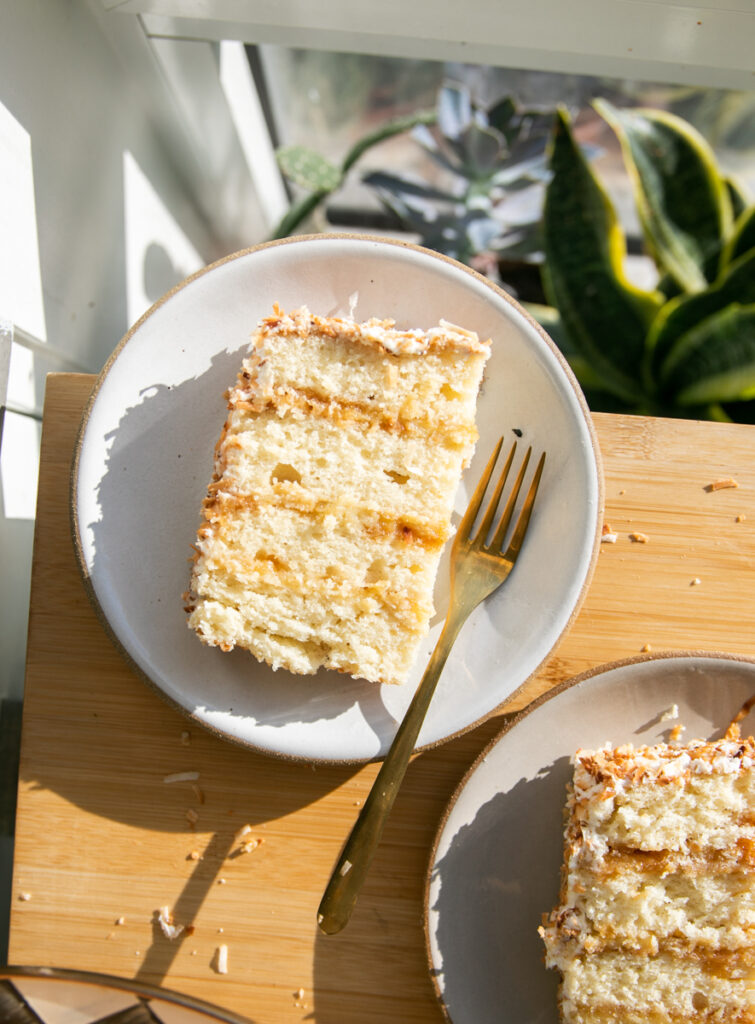
It honestly turned out even lighter than my original cake and I’m thrilled with the texture! Especially when fresh, the texture is so soft and tender–like a slightly more substantial cake mix, but with a way better flavor.
Lastly, the caramel: I was dreaming of soft white cake layered with drippy caramel. This is a basic caramel sauce, but instead of adding heavy cream at the end, we’re adding coconut milk for a subtle coconut flair.
Ingredient notes
Although the ingredient list might look long, we’re repeating many of the same ingredients across all four cake components. Here are some of the key ingredients that are essential for flavor and texture in this cake:
- Full-fat coconut milk: This is the basis of flavor in the coconut pastry cream and adds flair to the cake, caramel and buttercream! Look for unsweetened full-fat coconut milk from the can, not the coconut milk from the carton (not coconut cream or reduced-fat coconut milk). This recipe is designed to use exactly one whole can of room temperature coconut milk. Shake before using so you get a fairly even mix of coconut cream and water in the batter.
- Sour cream: Full-fat sour cream is key for the plush cake texture and subtle tang. Full-fat yogurt would be the next best substitute, but sour cream will provide the best results.
- Whole milk: In this recipe, whole milk is used in both the pastry cream and the cake in conjunction with coconut milk. This is partially so that we don’t have another partial leftover can of coconut milk after making this cake and partially to balance the overall fat content of the cake. It’s a fairly small amount in both cases, so you can also feel free to use a reduced fat or alternative nut milk in place of the whole milk.
- Unsalted butter: I always use unsalted butter when baking to control the amount of salt in the final product. You can use a European-style butter in the cake and frosting for the richest flavor, but any brand of butter will work!
- Large eggs: I always bake with large eggs. This recipe is designed to use two egg yolks in the coconut cream while reserving the egg whites for the cake, so don’t toss them out!
- Neutral oil: I used vegetable oil, but any neutral oil like canola, vegetable, avocado, refined coconut, grapeseed or safflower oil would all work. You could even use unrefined coconut oil if you’d like a stronger coconut flavor in this.
- Kosher salt: My recipes are standardized on kosher salt–if you’re using table salt, feel free to cut the amount of salt in half.
- Sweetened shredded coconut: I prefer the texture and flavor of sweetened shredded coconut best for the coating of this cake! However, if you can only find unsweetened shredded coconut, that will also work to coat the outside of the cake. It will obviously be less sweet, but that could be a good thing.
How to make this coconut caramel cake
Although this cake does require four different components, they are all pretty simple to make! You can bake the cake and make the pastry cream ahead of time if you’d like to make assembly easier for yourself.
Note: as written, this recipe makes a very small batch of buttercream just to cover the outside of the cake (more akin to a crumb coat) so that the toasted coconut will stick to it. Personally, I love this amount–but if you tend to like more frosting, I would double the quantities listed.
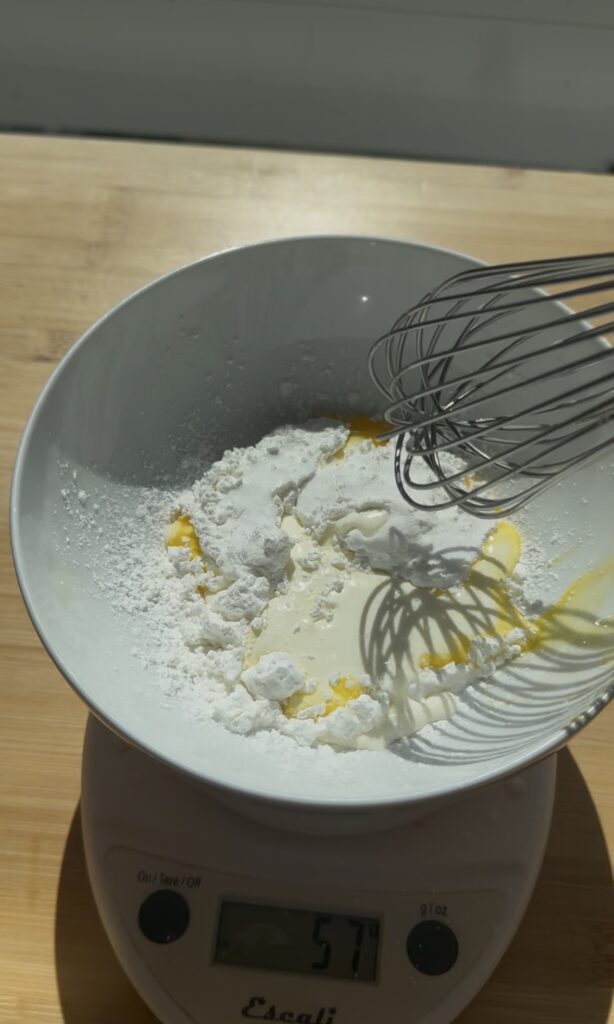
Step 1: To make the coconut pastry cream: set the coconut milk, milk and sugar over medium low heat in a small saucepan. In a separate bowl, whisk together the egg yolks, cornstarch and salt.
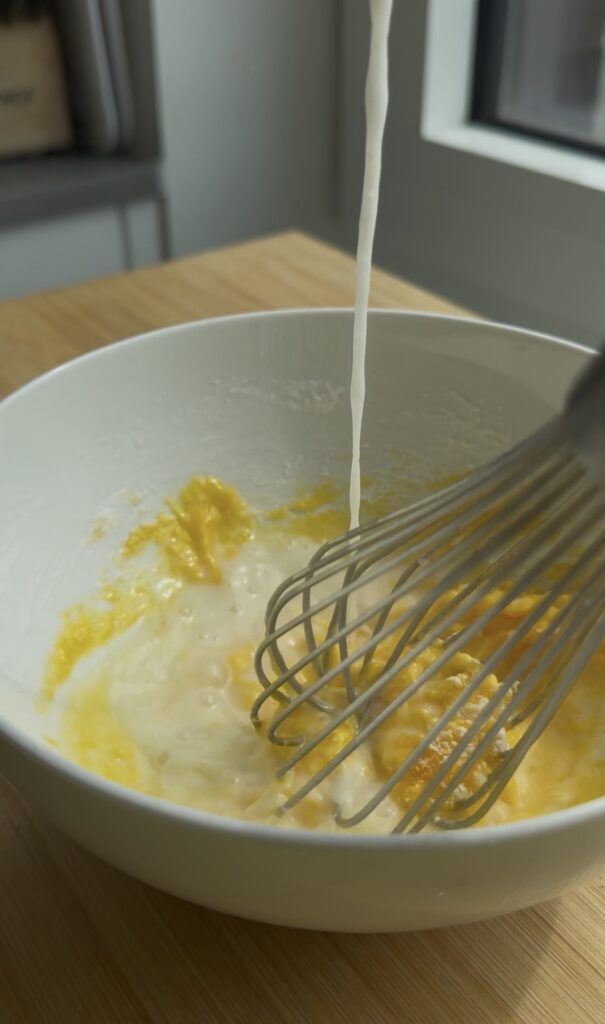
Step 2: Slowly whisk the hot milk into the egg yolk mixture. Once you’ve incorporated half the milk, return the yolk mixture to the saucepan and cook over low heat, whisking constantly until it thickens, 2-3 minutes. Remove from heat and pour into a heat-proof bowl.
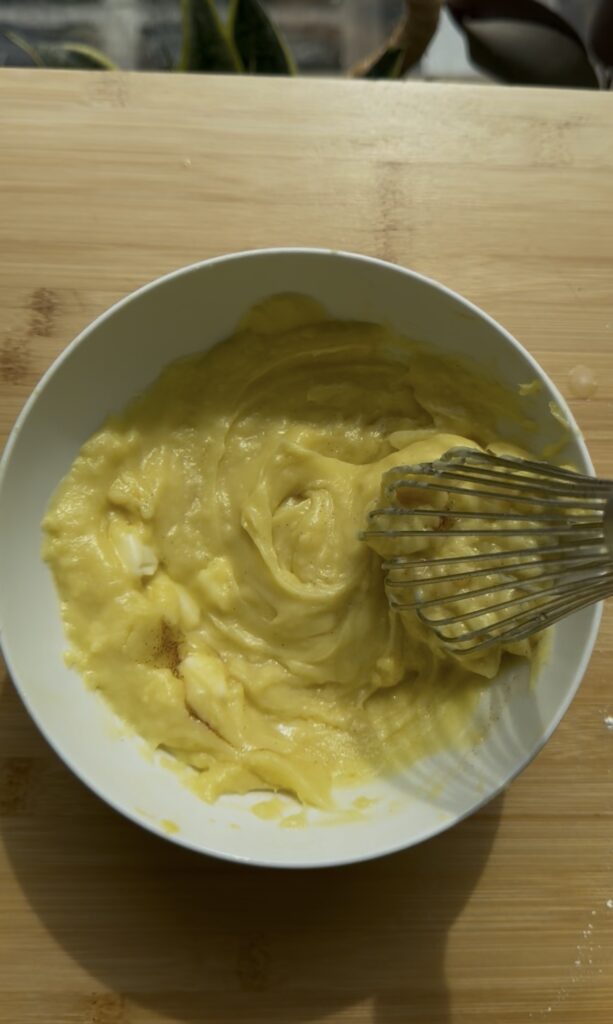
Step 3: Whisk in the butter and vanilla. Cover with a piece of plastic wrap pressed against the surface and refrigerate until cold, at least 3 hours.
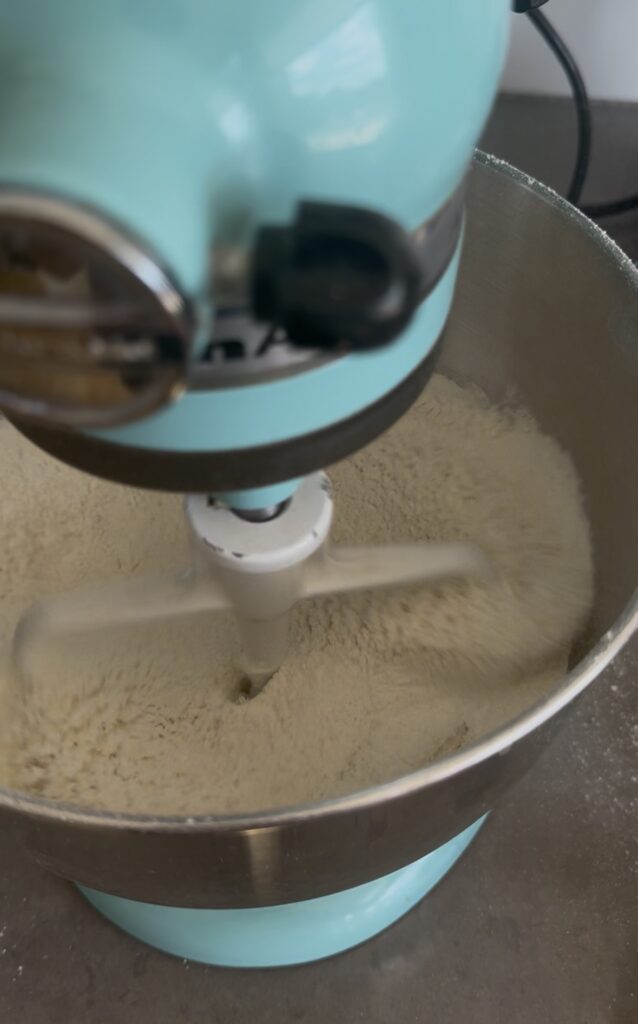
Step 4: To make the cake: in the bowl of a stand mixer, combine the dry ingredients and paddle to combine. On low speed, add the softened butter one tablespoon at a time and mix until you have a sandy, lightly moistened mixture.
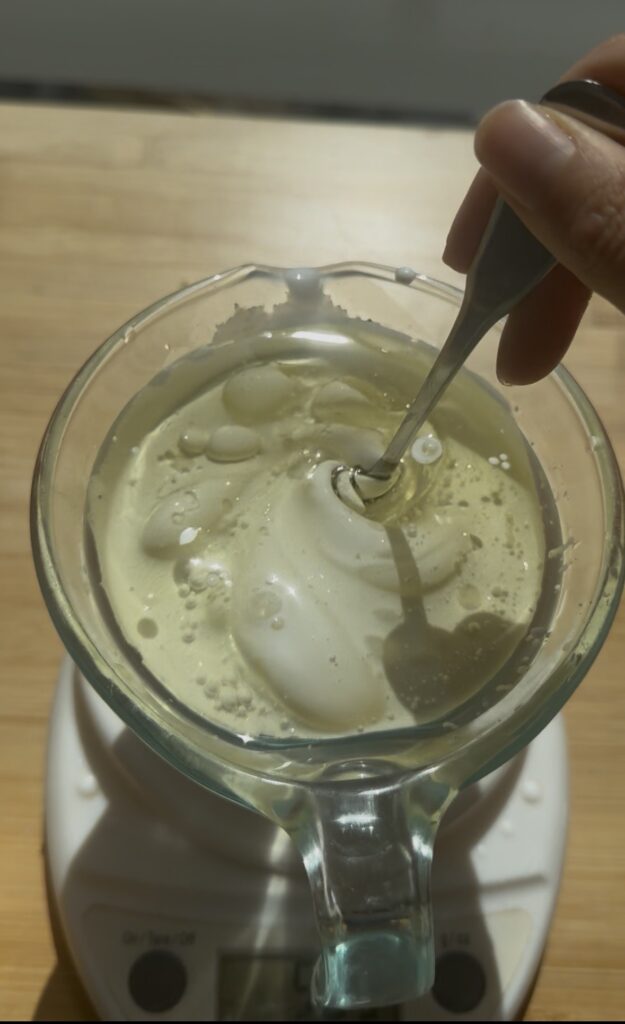
Step 5: In a small bowl or measuring cup, whisk together the sour cream, coconut milk, oil, milk or water, egg, egg whites and vanilla extract.
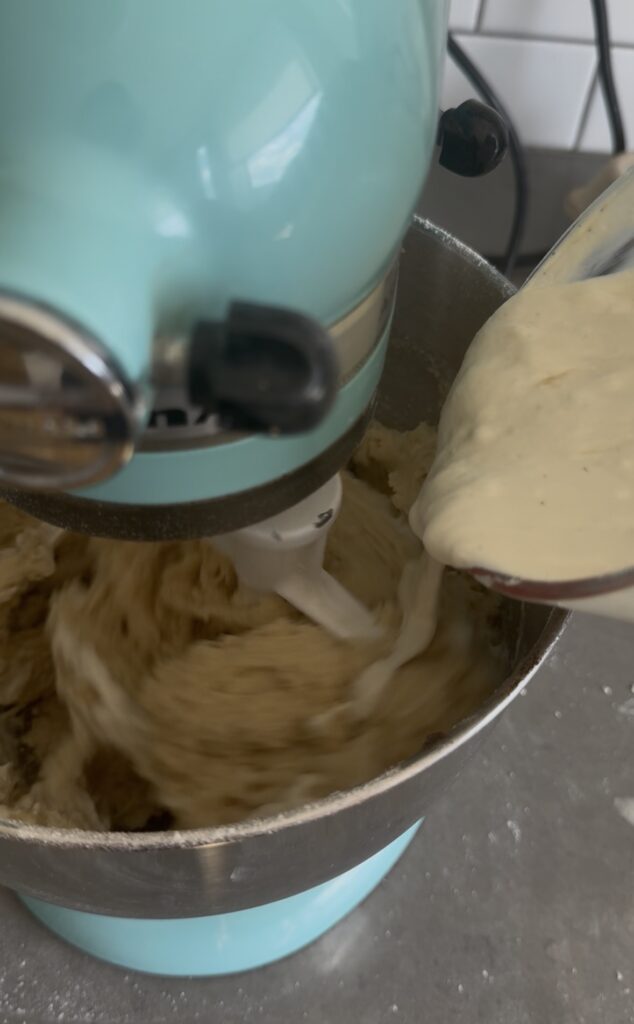
Step 6: Stream the sour cream mixture into the flour mixture and mix on medium for one minute until you have a smooth batter.
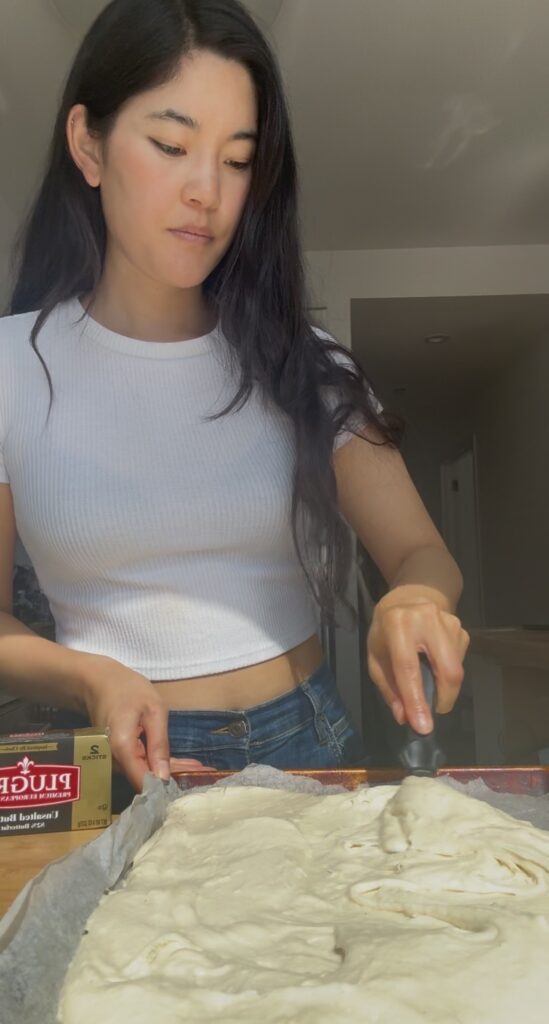
Step 7: Pour batter into prepared pan and bake for 37-42 minutes at 325 F or until the edges are golden and the middle springs back under your finger.
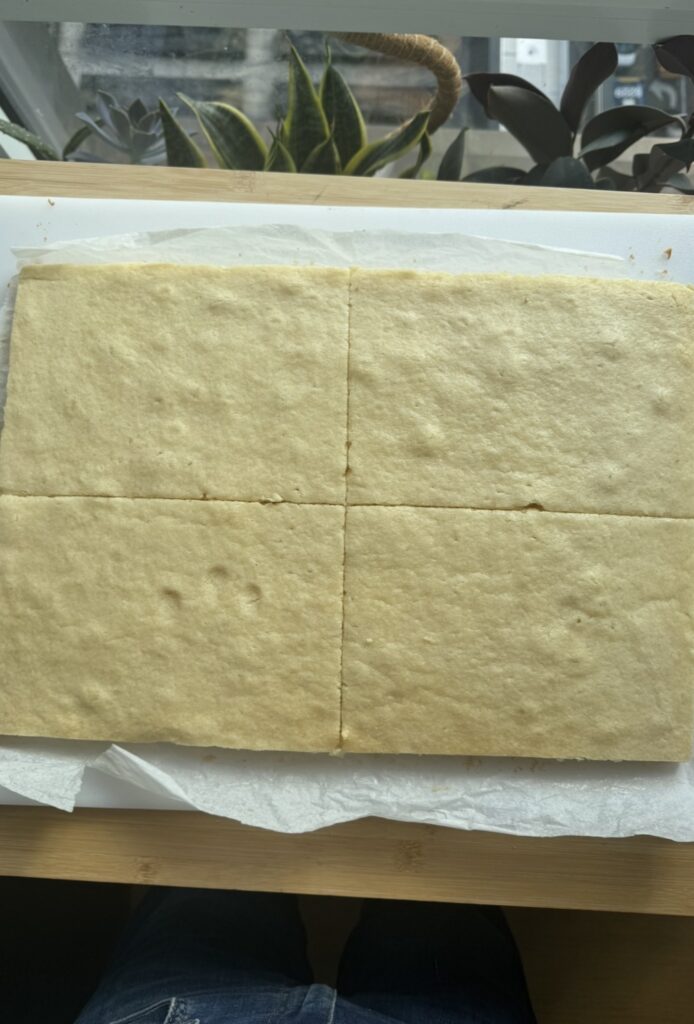
Step 8: Set cake aside to cool (once cool, trim the edges and slice into four equal rectangles). While the oven is still on, spread the shredded coconut on a baking sheet and bake for 10-15 minutes, stirring every 5 minutes, or until the coconut is a light golden brown.
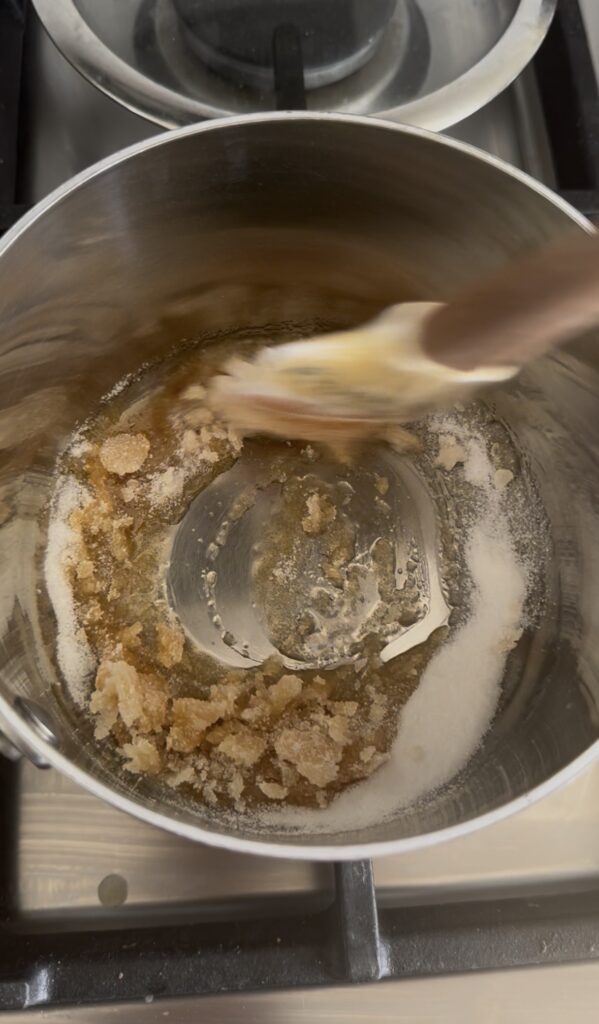
Step 9: To make the caramel sauce: melt the sugar in a small, dry saucepan over medium low heat until you have an amber syrup–you can nudge the sugar around with a spatula to get it to evenly melt.
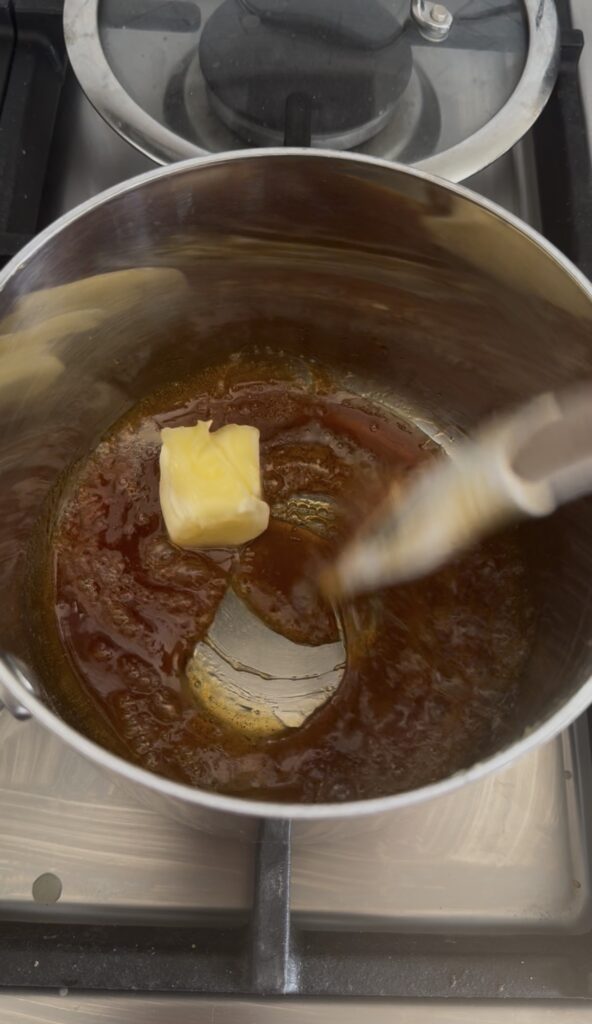
Step 10: Once the sugar is melted, turn the heat to low and quickly whisk in the butter until fully incorporated (mixture will sputter and bubble up).
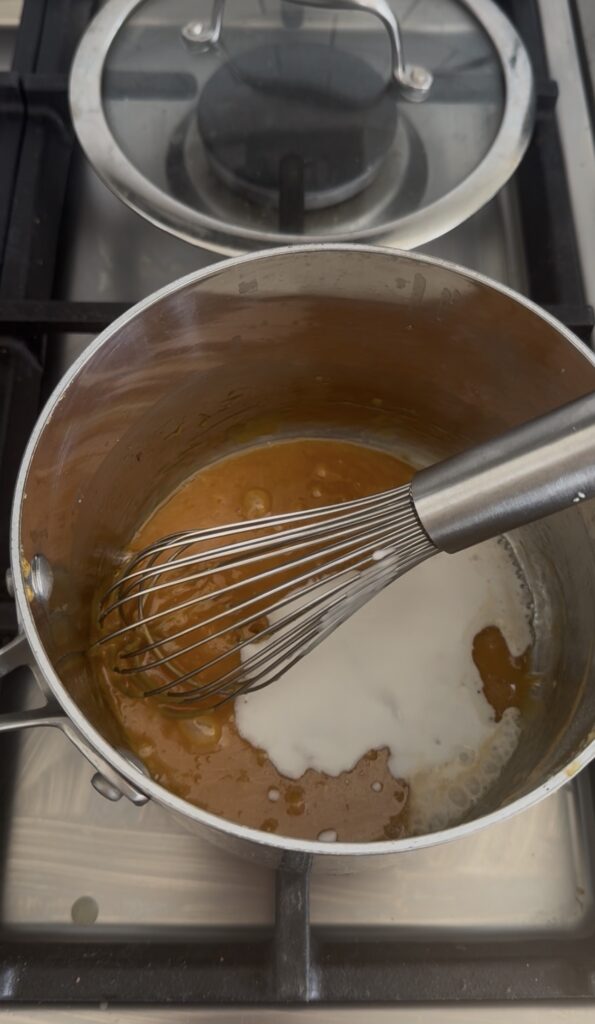
Step 11: Quickly whisk in the coconut milk until smooth, then remove from heat.
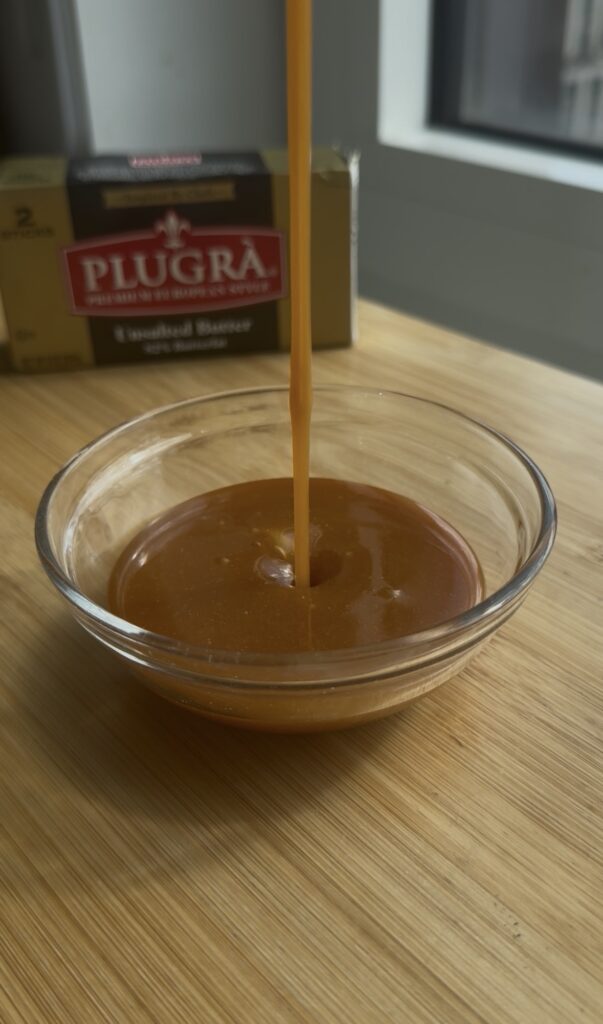
Step 12: Pour caramel into a heat-proof bowl and set aside to cool.
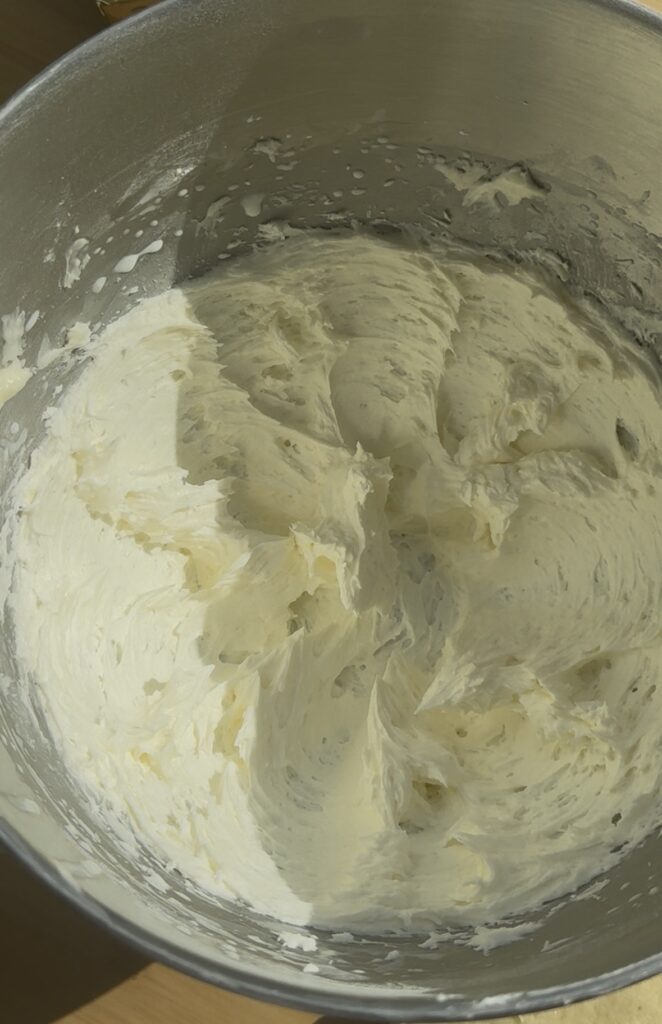
Step 13: To make the frosting: beat the butter until creamy. Gradually add the powdered sugar and beat until combined. Add the coconut milk, vanilla and salt and beat on medium high for 3 minutes, or until very pale and fluffy.
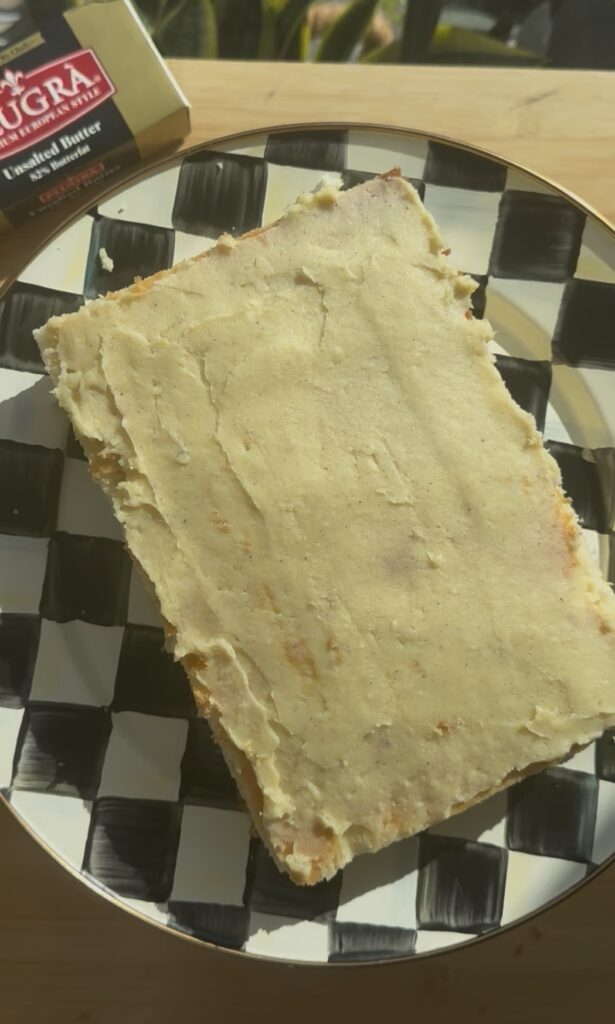
Step 14: Place one rectangle of cake on a cake plate or stand and spread 1/3 of the coconut pastry cream on top.
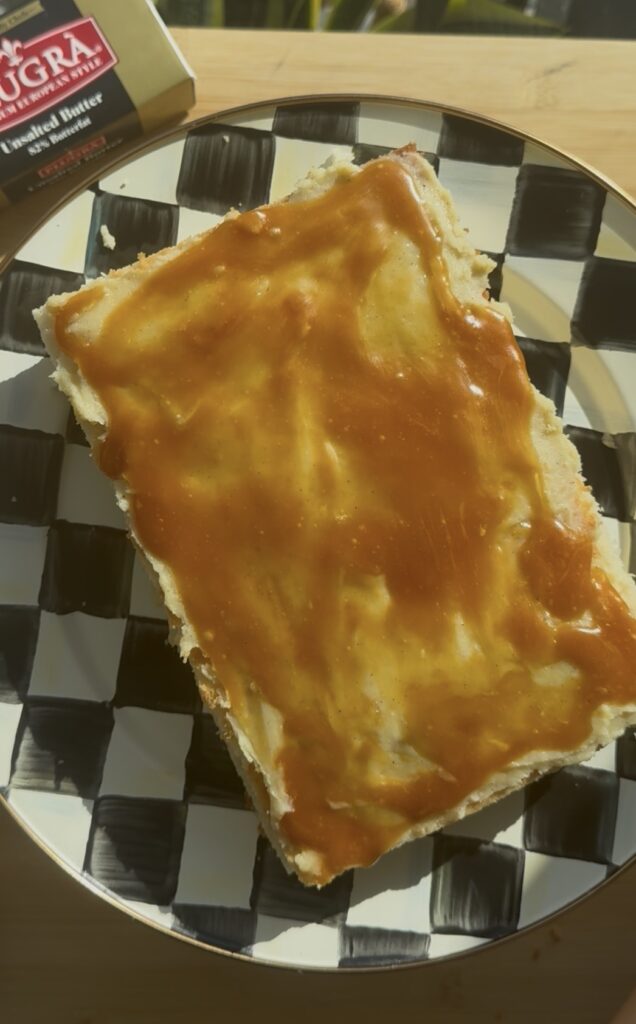
Step 15: Spread 1/3 of the caramel sauce on top. Repeat with the remaining cake, pastry cream and caramel, ending with a layer of cake.
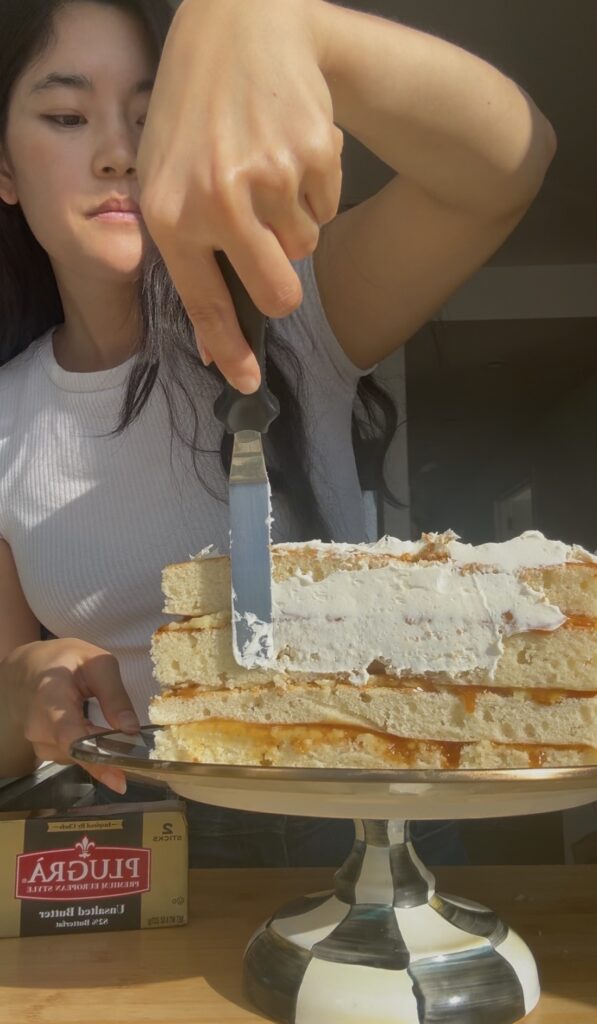
Step 16: Frost the entire cake with the coconut buttercream (this should be just enough to cover the entire cake).
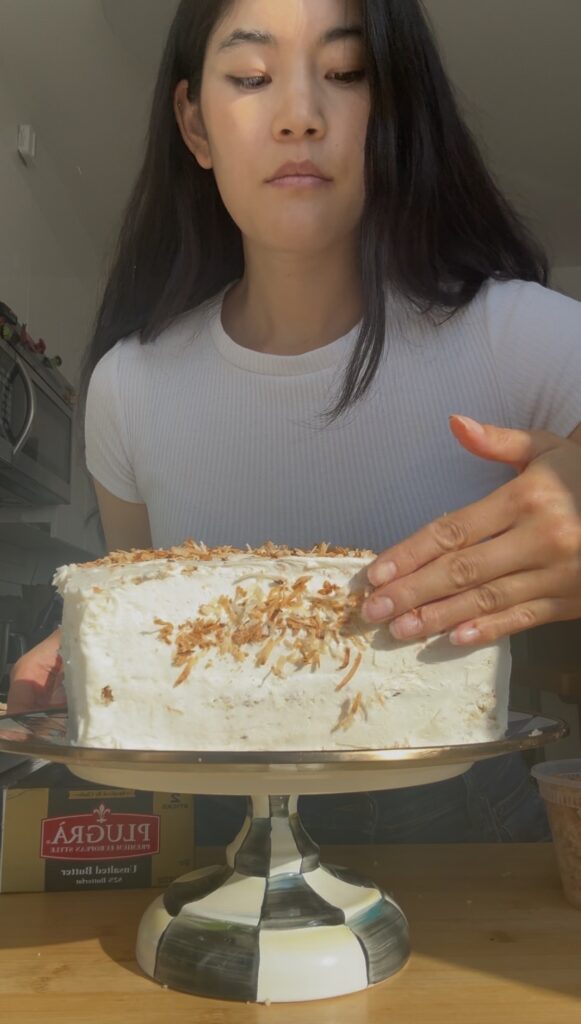
Step 17: Press the toasted coconut evenly all over the cake.
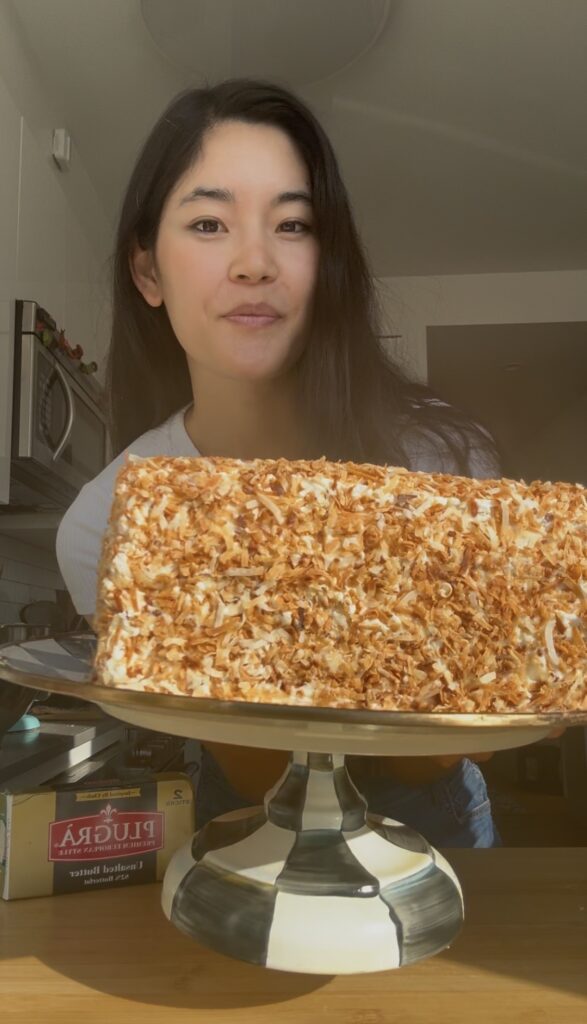
Step 18: Serve immediately or refrigerate until ready to serve.
Servings and storage
You can make this cake up to a day ahead of time and keep it in the fridge well covered. I recommend taking it out an hour or two ahead of time to let it come to room temperature before serving.
To prep components ahead of time:
- Cake: Can be baked, wrapped tightly and frozen for up to a week ahead of time. I recommend letting it defrost overnight in the fridge the day before you plan to assemble. If you make the cake the day before assembly, storing it overnight in the fridge is fine. (Cakes tend to dry out in the fridge, so I wouldn’t recommend storing it in the fridge for longer than overnight.)
- Coconut pastry cream: Can be made and stored in the fridge for up to 5 days.
- Caramel: Best made the day of, but you can make it a day or two ahead of time and rewarm in the microwave to loosen it up before assembling.
- Coconut buttercream: Best made right before assembling for the creamiest texture, but you can store it in the fridge for at least 3 days and rewhip before assembling.
- Toasted coconut: Can be toasted and stored in an airtight container at room temperature for at least a week.
Any leftover cake can be stored in an airtight container in the fridge for up to a week (or wrap slices individually and freeze for several weeks). Again, I highly recommend letting any leftover refrigerated slices temper at room temperature for at least 30 minutes before enjoying as cold cake will have a muted flavor and denser texture.
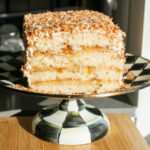
Coconut Caramel Cake
Equipment
- 1 half sheet pan (13×18")
- 1 small saucepan
- 1 baking sheet
- 1 Electric mixer
Ingredients
Coconut pastry cream
- 3/4 cup full-fat coconut milk* 170g
- 1/4 cup whole milk 57g
- 1/4 cup granulated sugar 50g
- 2 large egg yolks reserve the whites for the cake!
- 1 tbsp cornstarch
- 1/2 tsp kosher salt
- 2 tbsp unsalted butter 28g
- 3/4 tsp vanilla extract
Coconut cake
- 3 3/4 cups all-purpose flour 450g
- 2 1/4 cups granulated sugar 450g
- 3 1/4 tsp baking powder
- 1 tsp kosher salt
- 3/4 cup unsalted butter, softened to room temperature 170g
- 1 cup + 2 tbsp sour cream, at room temperature 254g
- 3/4 cup full-fat coconut milk, at room temperature or warmed 170g
- 6 tbsp neutral oil 75g
- 1/4 cup whole milk, at room temperature
- 1 large egg, at room temperature 50
- 2 large egg whites, at room temperature 60-70g
- 1 tbsp vanilla extract
Coconut caramel
- 1/2 cup granulated sugar 100g
- 2 tbsp unsalted butter 28g
- 2 tbsp full-fat coconut milk 38g
- 1/4 tsp kosher salt
Coconut buttercream
- 8 tbsp unsalted butter, softened 113g
- 2 cups powdered sugar 226g
- 2-4 tbsp full-fat coconut milk
- 3/4 tsp vanilla extract
- 1/4 tsp kosher salt
For assembly
- 2 cups sweetened, shredded coconut
Instructions
Make the coconut pastry cream
- In a small saucepan, add 3/4 cup full-fat coconut milk*, 1/4 cup whole milk and 1/4 cup granulated sugar and bring set over medium low heat until just starting to steam.
- In a separate heat-proof bowl, whisk together 2 large egg yolks, 1 tbsp cornstarch and 1/2 tsp kosher salt until smooth.
- Slowly stream the hot milk mixture into the egg yolk mixture while whisking constantly. Once you've added about half the mixture, pour the yolk mixture back into the saucepan and set over medium low heat again, whisking constantly.
- Once the mixture thickens to the point where you can see marks of the whisk in the cream (1-2 minutes), remove from heat and pour back into the heat-proof bowl. Whisk in the vanilla and butter until smooth. Cover with plastic wrap (pressed against the surface of the pudding to prevent a skin from forming) and refrigerate until cold, at least 3 hours or up to overnight.
Make the coconut cake
- Preheat the oven to 325 F. Grease and line a half sheet pan (13×18") with parchment paper.
- In the bowl of a stand mixer fitted with a paddle attachment, add 3 3/4 cups all-purpose flour, 2 1/4 cups granulated sugar, 3 1/4 tsp baking powder and 1 tsp kosher salt and mix to combine.
- With the mixer on low speed, add the 3/4 cup unsalted butter, softened to room temperature, 1 tbsp at a time, until all the butter is incorporated. Continue mixing for at least one full minute–the mixture should look sandy with tiny bits of butter.
- Meanwhile, in a large measuring cup or medium mixing bowl, whisk together 1 cup + 2 tbsp sour cream, at room temperature, 3/4 cup full-fat coconut milk, at room temperature or warmed, 6 tbsp neutral oil, 1/4 cup whole milk, at room temperature, 1 large egg, at room temperature, 2 large egg whites, at room temperature and 1 tbsp vanilla extract. (If the coconut milk is chunky from the can, try microwaving it for 30 seconds to get smooth it out. If you forgot to bring your sour cream to room temperature, whisk the sour cream and coconut milk together, then microwave for 30 seconds to warm.)
- Slowly stream the sour cream mixture into the dry ingredients. Once the mixture is fully incorporated, mix on medium speed for 1 minute until you have a smooth and silky batter.
- Pour batter into the prepared pan and bake for 37-42 minutes, or until the edges are golden and the middle springs back under your finger.
Toast the coconut
- While the cake is baking, spread 2 cups sweetened, shredded coconut on a baking sheet in an even layer. Bake at 325 F (alongside the cake if there's room) for 10-15 minutes, stirring every 5 minutes, or until the coconut is a light golden brown. Set aside to cool completely.
Make the caramel
- Make sure your butter, coconut milk and salt are measured out and ready to use before starting.Add 1/2 cup granulated sugar to a small saucepan and set over medium low heat. Let cook until most of the sugar has melted into an amber syrup, nudging any unmelted sugar if needed. As soon as all the sugar has melted, quickly and carefully add 2 tbsp unsalted butter (mixture will sputter and foam up) and whisk until mostly incorporated, about 20 seconds.
- Quickly and carefully add 2 tbsp full-fat coconut milk and whisk again until smooth. Remove from heat and whisk in 1/4 tsp kosher salt; transfer to a heat-proof bowl to cool.
- Make the coconut buttercream
- In the bowl of a stand mixer, add 8 tbsp unsalted butter, softened and beat on medium until softened and creamy.
- Gradually add 2 cups powdered sugar about 1/2 cup at a time on low speed until incorporated. Add 2 tbsp coconut milk, 3/4 tsp vanilla extract and 1/4 tsp kosher salt and beat on medium speed for about 3 minutes, or until pale white and very fluffy. If the frosting looks a bit stiff, add the remaining 2 tbsp coconut milk. Use immediately (or store overnight and re-whip before using).
Assembly
- Trim the edges of the cooled cake and cut into four equal rectangles. Lay down the first rectangle of cake and spread 1/3 of the coconut pastry cream evenly on top. Drizzle 1/3 of the caramel on top and spread evenly.
- Repeat with the remaining 3 layers of cake, pastry cream and caramel, ending with the last layer of cake and filling in any drooping edges with cake scraps. Frost the entire cake with the coconut buttercream–this will be a relatively thin layer of frosting. Gently press the toasted coconut onto all sides of the cake. Keep at room temperature if serving in the next couple hours; otherwise refrigerate until ready to serve!

Lauren
Made this for Mother’s Day — this is one of the best cake recipes I’ve ever baked. Super moist, fluffy, and balanced. The caramel and custard layers were the perfect addition to elevate the cake. Yum!
erika
So happy you enjoyed–thank you Lauren!
Christina
I made this using carton coconut milk not realizing that it was the incorrect coconut milk to use (just saw your response in another comment). If I were to remake this, would I use the thickened part in a can of coconut milk? Or can I use canned coconut cream? Despite it not being super structurally sound, your description of the cake itself was spot on! It’s super tender and goes well with all the other components.
erika
Sorry for the confusion, just updated the post to make that clearer! I shake the can of coconut milk so that you get a mix of the thick coconut cream and water (ideally it emulsifies together but some brands separate more than others). Glad the cake went well regardless!
Mia
loved this cake!!! made it for my birthday and it was amazing. lots of intricate details to focus on, and it all comes together perfectly!
erika
So happy to hear, thank you Mia!!
Kenn williams|OkCodePromo.fr
Is there a more affordable substitute for full-fat coconut milk that still keeps the flavor and texture close to the original recipe?
erika
Unfortunately not that I know of! Coconut milk from the carton/low-fat coconut milk won’t have the same effect.
Randi
I want to make this so badly. I would like to use cake pans. any recommendations on size? three 6in pans?
thank you for your help.
erika
My other coconut cake (batter is very similar) gets baked in 3 8″ pans for 30 minutes!